Chlorine disinfection: concentration matters
Check the active ingredient, concentration, water volume and contact time. There is no universal eight-drop dose.
Chlorine does not remove fuel, toxic chemicals, heavy metals, salts or radioactive material. It is not reliable against Cryptosporidium. If the concentration or product suitability is unknown, do not guess.
First identify your exact bleach
Follow your local emergency instructions and any drinking-water disinfection directions on the exact product. Only use suitable regular, unscented sodium-hypochlorite bleach. Do not use scented, splashless, color-safe or cleaner-blended bleach. Store it properly and check age and labeling; bleach loses strength.
Different countries sell different strengths. Do not extrapolate a recipe to a concentration that is not covered. Tablets are separate products with their own strength and water-volume instructions.
EPA method for 6% or 8.25% bleach
The steps below follow EPA’s emergency method for one US gallon (3.8 L) of water. Use them only with suitable bleach at one of the two strengths listed. Follow your local water notice or the product’s drinking-water instructions when those apply.
- 6% sodium hypochlorite: 8 drops per 1 US gallon (3.8 L).
- 8.25% sodium hypochlorite: 6 drops per 1 US gallon (3.8 L).
- EPA says double its listed dose for cloudy, colored or very cold water; settle/prefilter first. Use the complete EPA instructions, including water volume and waiting time.
Mix, wait and protect
Under the EPA protocol, stir well and wait at least 30 minutes. EPA says the water should have a slight chlorine odor; if not, repeat the dose and wait another 15 minutes. Use an appropriate dropper, not an unmeasured pour. Chlorine odor does not prove freedom from chemical contaminants.
Temperature, clarity and resistant organisms affect disinfection. Use boiling or a verified organism-specific alternative where chlorine is not suitable. Keep treated water in a sanitized covered container and keep the dirty side separate.
Why do some instructions list different doses?
Bleach strengths and published methods differ. This guide follows EPA’s method for 6% or 8.25% bleach. Keep the dose, water volume, and waiting steps from one applicable method together. For another bleach strength, use the product’s drinking-water directions or current local instructions. Do not guess a dose.
Treatment options & limitations
Related recommended products
These products are not a guarantee of suitability for every source; verify the exact label and reduction claims.
As an Amazon Associate I earn from qualifying purchases.
 View on Amazon (paid link)
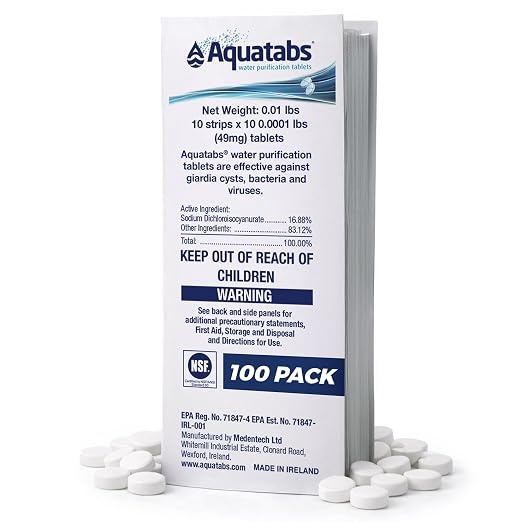
Aquatabs Water Purification Tablets — 100 Pack
Compact water-disinfection tablets, individually sealed in foil strips. Follow the package’s water-volume and contact-time instructions, and check the expiration date before use.
Related water guides
Sources
- CDC: Making water safe in an emergency
- CDC Yellow Book: Water disinfection for travelers
- CDC: Home water treatment systems
- CDC: Create and store an emergency water supply
- EPA: Emergency disinfection of drinking water
- NSF: Water treatment system standards
- WHO: Household water treatment and safe storage after emergencies
Reviewed November 21, 2026. Follow current local notices and the instructions for your exact treatment product.