Chemical disinfection: chlorine, chlorine dioxide & iodine
Chlorine dioxide, chlorine-releasing tablets and iodine are not interchangeable. Follow the exact label and full waiting time.
No single household method handles every contaminant. Do not boil or disinfect water suspected of containing fuel, toxic chemicals or radioactive material; choose another safe source and follow local instructions.
Chemical disinfection: chlorine, chlorine dioxide & iodine
Chemical disinfection depends on the product, water volume, clarity, temperature and contact time. Follow the actual label or current official emergency instructions. Do not transfer the dosage from one bottle, tablet strength or active ingredient to another.
- Chlorine bleach: use only a product that current official guidance permits for drinking-water disinfection, with the specified sodium-hypochlorite concentration. Scented, splashless and cleaner-blended bleach are not substitutes. Ordinary chlorine is not reliable against Cryptosporidium.
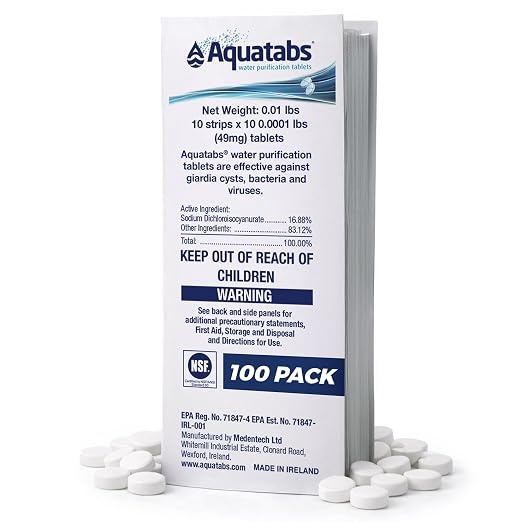
- Chlorine-based tablets: individually packaged tablets can be convenient, but not all are chlorine dioxide. Aquatabs uses sodium dichloroisocyanurate (NaDCC), a chlorine-releasing compound; follow its own label and limitations.
- Chlorine dioxide: some labeled products can inactivate Cryptosporidium with the full specified contact time. That may be much longer than the time for bacteria or viruses. Do not shorten the wait or assume every tablet has this claim.
- Iodine: an established short-term disinfection option, not a routine long-term drinking-water plan. It is not reliable against Cryptosporidium and is unsuitable for some people, including during pregnancy or with thyroid conditions; follow CDC cautions and obtain individualized health guidance where relevant.
- Disinfection does not desalinate water or remove dissolved chemical contamination. A treated taste or chlorine odor is not proof that every hazard has been addressed.
Pack the instructions with the tablets
Check the active ingredient, tablet strength, water volume, expiration and contact time before an outage. Keep the original label on paper. The Aquatabs product listed here uses NaDCC, not chlorine dioxide; do not borrow another product’s parasite claim or waiting time.
Some chlorine-dioxide products require a much longer wait for Cryptosporidium than for bacteria. Iodine is a short-term option with important health cautions, not a routine prolonged-outage plan. Do not improvise iodine from a medicine bottle or shorten label contact times.
Treatment options & limitations
Related recommended products
These products are not a guarantee of suitability for every source; verify the exact label and reduction claims.
As an Amazon Associate I earn from qualifying purchases.
 View on Amazon (paid link)
Aquatabs Water Purification Tablets — 100 Pack
Compact water-disinfection tablets, individually sealed in foil strips. Follow the package’s water-volume and contact-time instructions, and check the expiration date before use.
Related water guides
Sources
- CDC: Making water safe in an emergency
- CDC Yellow Book: Water disinfection for travelers
- CDC: Home water treatment systems
- CDC: Create and store an emergency water supply
- EPA: Emergency disinfection of drinking water
- NSF: Water treatment system standards
- WHO: Household water treatment and safe storage after emergencies
Reviewed November 17, 2026. Follow current local notices and the instructions for your exact treatment product.